Ketika seorang anak didiagnosa dengan Autism Spectrum Disorder (ASD), banyak orang tua bertanya: “Apakah terapi benar-benar diperlukan?” Jawabannya pada umumnya adalah ya, terapi sangat disarankan.
Alasan Mengapa Terapi Diperlukan
Meningkatkan kemampuan komunikasi dan sosial: Terapi seperti ABA terbukti membantu anak mengembangkan fungsi komunikasi dan perilaku adaptif.
Memperbesar peluang hasil jangka panjang yang lebih baik: Intervensi dini meningkatkan hasil perkembangan anak.
Mengurangi dampak negatif pada kualitas hidup dan beban keluarga: Terapi mendukung anak dan keluarga agar lebih sejahtera.
Masukan untuk Orang Tua
Mulailah sedini mungkin.
Pilih intervensi yang berbasis bukti seperti ABA.
Libatkan keluarga dalam proses terapi.
Sesuaikan terapi dengan kebutuhan unik anak.
Pantau perkembangan secara berkala dan fleksibel.
Fokus pada potensi anak, bukan hanya kesulitannya.
Kesimpulan
Terapi bagi anak dengan autisme bukanlah pilihan, Terapi merupakan bagian penting dalam mendukung perkembangan sosial, komunikasi, dan kemandirian mereka. Dengan terapi Sejak dini, memilih tempat terapi terbaik, dan melibatkan keluarga secara aktif, peluang anak untuk mencapai potensi terbaiknya menjadi lebih besar.
Referensi
– Centers for Disease Control and Prevention (CDC): https://www.cdc.gov/autism/treatment/index.html
Yoga Budhi Santoso1 , Ana Fatimatuzzahra2 , Een Ratnengsih3, Oom Sitti Homdidjah4 , Rina Maryanti5 , Prinanda Gustarina Ridwan6 ,
Erni C. Siregar7
1,2,3,4,5,6 Universitas Pendidikan Indonesia, Bandung 40154, Indonesia 7 Edufa Autism Therapy Center, Bandung 40262, Indonesia yoga.b.santoso@upi.edu
Abstract. This study explores the emotional experiences and perceptions of siblings who have a brother or sister with Autism Spectrum Disorder (ASD). Using a questionnaire-based approach with 10 participants (ages 4–14), the study examines feelings of acceptance, shame, fairness in parental caregiving, and emotional bonding. The findings show that the majority of siblings reported feeling “neutral” (60%) or “very affectionate” (60%) toward their sibling with ASD, while a smaller percentage expressed sadness (30%) or disappointment (10%). Notably, none of the participants reported feeling ashamed of their sibling with ASD, highlighting the role of family and social support in reducing stigma. The study also reveals that 90% of the siblings perceived parental affection as fair, although 10% felt their sibling with ASD received more attention. These findings align with previous research emphasizing sibling resilience, but also underscore the need for targeted interventions to address emotional challenges. By focusing on younger siblings and gender differences, this research fills a critical gap in the literature and provides insights for developing family-based support strategies.
Autism Spectrum Disorder (ASD) is a neurodevelopmental disorder that impacts social interaction and communication, as well as restricted and repetitive behaviors in interests or activities [1]. The presence of a child with ASD significantly affects the entire family, including siblings [2], [3]. Siblings may experience challenges related to acceptance [4], [5], emotional issues such as guilt and frustration [6], and even increased risks of developing problematic behaviors in interaction, anger, or aggression [7]. These conditions do not only affect the individual with ASD but also the family system—especially siblings who play a crucial role in the caregiving dynamic and emotional development [8].
Aryaniet al. (eds.), Proceedingsofthe1stInternationalConferenceonEducationalScienceandTeacherEducation (ICESTE 2025), Advances in Social Science, Education and Humanities Research 960, https://doi.org/10.2991/978-2-38476-489-1_43
Siblings of children with ASD often face unique challenges, including ambivalent emotions such as love, confusion, frustration, or even jealousy due to the dispropor- tionate attention given to their sibling with special needs [9]. Prior studies have shown that siblings may experience heightened stress and reduced psychological well-being if not adequately supported [7]. However, some studies have also found that many sib- lings develop greater empathy and emotional maturity compared to their peers [2].
Although many studies have explored sibling experiences, most focus on the per- spectives of parents or siblings in adolescence and adulthood [10]. There is a gap in the literature regarding how children aged 9–17 perceive their relationship with an ASD sibling, particularly in social contexts where understanding of ASD remains limited. Furthermore, previous research has paid little attention to the emotional response dif- ferences between male and female siblings, despite gender being a factor that influences how children process and respond to family dynamics [11].
This study aims to address that gap by analyzing the perceptions and emotional ex- periences of siblings of children with ASD—specifically in terms of acceptance, shame, fairness in caregiving, and emotional bonding. These findings are crucial for develop- ing psychoeducational interventions that support sibling well-being and strengthen family relationships. By understanding their experiences, educators, therapists, and par- ents can create a more inclusive and empathetic environment for all family members [3].
2 Methodology
This study adopted a qualitative exploratory design to gain an in-depth understanding of sibling readiness and emotional perceptions among children who have brothers or sisters with Autism Spectrum Disorder (ASD). In qualitative research, participants are regarded as experts who understand their own perspectives and experiences in respond- ing to research questions [12].
The respondents in this study were 10 children (5 girls and 5 boys), aged 9 to 18 years, who have siblings with Autism Spectrum Disorder (ASD). Their siblings with ASD ranged in age from 4 to 14 years. Taking into consideration that the study focuses on children but requires participants who are capable of reading and comprehension— since the instrument used was a questionnaire that had to be completed independently by the child without parental assistance.
Data were collected using a structured questionnaire that integrated both quantitative and qualitative components. The quantitative section comprised closed-ended, Likert- scale items designed to measure emotional perceptions and interaction patterns—for example, the question “How do you feel about your sibling?” offered options such as sad, neutral, and affectionate. The Likert-scale questions to assess emotional percep- tions (e.g., “happy,” “neutral,” “sad”) and interaction-related variables such as fre- quency of activities together and perceived closeness. These responses were coded and presented as descriptive statistics (e.g., percentages such as 60% neutral, 30% sad) to provide a quantifiable overview of emotional perceptions. Meanwhile, the qualitative section consisted of open-ended prompts such as “Describe your relationship with your
sibling,” which encouraged participants to elaborate on their feelings and share specific experiences, providing richer contextual insights.
The data collection procedure began with distributing an invitation to parents of chil- dren with ASD. Parents who agreed to participate were asked to share the questionnaire link with their children. To ensure authenticity, the questionnaire was completed inde- pendently by the children without parental assistance. All responses were screened for completeness and assessed against the study’s inclusion criteria before analysis.
For data analysis, quantitative responses from the closed-ended questions were sum- marized using descriptive statistics (frequencies and percentages) to identify patterns in emotional perceptions and sibling interactions. Qualitative responses from the open- ended questions were examined using thematic analysis, which involved coding the data to identify recurring themes, emotional patterns, and relationship dynamics ex- pressed by the participants.
3 Resultand Discussion
Based on the questionnaires distributed, a total of 18 respondents filled out the form. However, after selection based on completeness and age appropriateness, only 10 re- spondents met the criteria. The selected respondents consisted of 5 girls and 5 boys, all of whom had a sibling (older or younger) with ASD, ranging in age from 4 to 14 years. Details are presented in Table 1.
Table 1. Respondent Data & Sibling with ASD Conditions
Data of Siblings with Typical Development Data of Siblings with ASD
Initial
Gender
Age (Years)
Education
Position
Sib- ling’s Gen- der
Sib- ling’s Age
Current Sibling
Current Sibling
RR
F
10
Primary
Older Sibling
M
4
Can make eye contact when spoken to, but only briefly.
Plays alone but doesn’t avoid interaction when invited to play.
Able to speak but not for communication (e.g., repeats favorite words heard says mom/dad/sister but not with intent).
Needs significant help with selfcare (can eat and drink independently but needs help with other activities).
Behavior is relatively calm.
C
F
13
Junior High
Older Sibling
M
10
Can make eye contact when spoken to, but only briefly
Plays alone but doesn’t avoid interaction.
Can speak and communicate (can express needs and answer questions).
Mostly independent, needs some help.
Tends to selfharm (e.g., hits or bangs head when upset).
Fully dependent (needs help in allselfcare tasks).
Tends to hurt oth ers (e.g., hitting, pulling hair, kicking when upset).
The number of respondents was dominated by older siblings of children with ASD, with only one respondent being a younger sibling. The siblings with autism consisted of one girl and nine boys. Although the total number of participants was only ten and does not represent the general population, this finding reflects the fact that autism is more prevalent in males [13], [14], [15].
The conditions of the siblings with ASD varied in terms of interaction and commu- nication, independence, and behavior. In terms of eye contact, all were able to make eye contact, though only briefly, and only two children were reported to enjoy playing with others, while the rest preferred to play alone. Their communication abilities ranged from those who could speak but were incomprehensible or only babbled, those who could speak but not communicate meaningfully, to those who were able to use speech functionally for communication. Regarding behavior, seven children were described as calm, while the other three exhibited hyperactive behavior, self-harming tendencies, or aggressive behavior toward others. This diversity aligns with the nature of autism as a spectrum disorder, which results in wide variations in interaction, communication, so- cial skills, and behavior [16], [17], [18], [19].
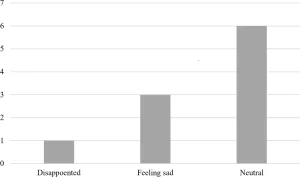
Based on the questionnaire responses, only one respondent reported feeling disap- pointed about having a sibling with ASD, and two reported feeling sad, while the ma- jority felt “neutral.” Feelings of sadness and disappointment were more common among female respondents. However, none of the participants expressed feelings of shame re- garding their sibling with ASD. This finding is in line with research indicating that siblings of children with ASD often experience emotional responses such as sadness [8]. These feelings may be related to a lack of understanding about ASD or feelings of being overlooked [9]. The “neutral” response may reflect a level of emotional adjust- ment that has already taken place, consistent with findings that most siblings of children with ASD eventually develop emotional resilience, even when faced with added stress [20].
Fig.1.Data of Feeling about having a siblings with ASD
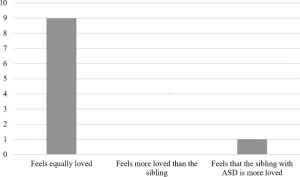
Fig.2.Data of Feeling about being loved by Parents
Fig.3.Data of Feeling of Shame about having a sibling with ASD
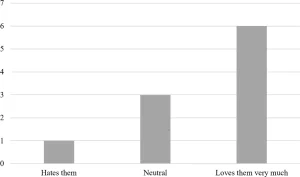
Fig.4.Data of Feeling toward a sibling with ASD
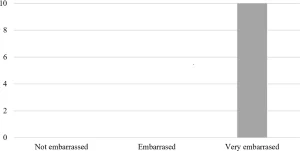
Regarding feelings of shame about having a sibling with ASD, all respondents—10 out of 10—stated that they were “not ashamed” to have a sibling with ASD. This result supports earlier findings that siblings tend not to feel ashamed when they understand the condition of ASD [2]. Strong family and social support can play a significant role in reducing stigma [3].
In relation to the perception of fairness in parental affection between the respondent and their sibling with ASD, 9 respondents felt that “both were equally loved,” while 1 respondent felt that their sibling with ASD was “more loved.” This finding aligns with research which found that most siblings do not feel neglected, even though some may perceive an imbalance in attention [21]. Parents who are able to divide their time and affection fairly can help minimize such perceptions [9].
Regarding the respondent’s affection toward their sibling with ASD, the majority of children—6 out of 10—reported “deep affection”, 3 respondents felt “neutral,” and 1 respondent stated that they “hated” their sibling. This finding is consistent with a study showing that siblings often develop strong emotional bonds with their sibling with ASD, even though some may experience frustration [10]. The reported hatred by one respondent may be related to daily conflict or a lack of support [11].
Although this study involves a limited number of respondents, its findings should be interpreted with caution due to the small sample size and the narrow age range of the siblings (4–14 years), which does not fully reflect the intended inclusion criteria of 9– 18 years. This limitation may reduce the generalizability of the results to broader sibling populations, particularly older adolescents or those in different cultural and socioeco- nomic contexts. Nevertheless, it concludes that siblings generally accept their sibling with ASD, even though some children experience sadness or disappointment. The low stigma toward ASD, likely influenced by parental guidance, indicates that most chil- dren do not feel ashamed of having a sibling with ASD. Furthermore, the strong emo- tional bonds formed contribute to the majority expressing affection for their ASD sib- ling. Future studies should consider recruiting a larger and more diverse sample, possi- bly through multi-site collaboration, and employing mixed-method approaches to cap- ture both statistical trends and nuanced personal narratives. For future research, in-
depth qualitative studies through further interviews are needed to understand the emo- tional dynamics among siblings. Further analysis is also necessary to explore the dif- ferences in responses between male and female siblings, and longitudinal studies are recommended to monitor how siblings’ perceptions change over time as they grow into adolescence and adulthood.
Acknowledgments.
This study was funded by the Research Grant from the RKAT of the Faculty of Educational Sciences, Universitas Pendidikan Indonesia (UPI), Fiscal Year 2025, under Research Grant No.4543/UN40.A1/PT.01.01/2025.
DisclosureofInterests.
The authors have no competing interests to declare that are relevant to the content of this article.
I. Orsmond, H. Y. Kuo, and M. M. Seltzer, “Siblings of individuals with an autism spec- trum disorder: Sibling relationships and well-being in adolescence and adulthood,” Autism, vol. 13, no. 1, pp. 59–80, 2009.
P. Hastings and M. A. Petalas, “Self-reported behavior problems and sibling relationship quality by siblings of children with autism spectrum disorder,” Child: Care, Health and Development, vol. 40, no. 6, pp. 833–839, 2014.
Alon, “Perceptions and attitudes of siblings towards their brother/sister with ASD,” Jour- nal of Autism and Developmental Disorders, vol. 52, pp. 112–126, 2022.
Gürsoy and E. A. Sezer, “Siblings of individuals with autism: Their experiences and needs,”InternationalJournalofEarlyChildhoodSpecialEducation, vol. 12, no. 1, pp. 245– 259, 2020.
S. Rossetti and S. Hall, “Addressing sibling relationships in transition planning for stu- dents with autism spectrum disorders,” Teaching Exceptional Children, vol. 48, no. 5, pp. 266–273, 2015.
Ross and M. Cuskelly, “Adjustment profiles of siblings of children with autistic disorder,”
JournalofIntellectualandDevelopmentalDisability, vol. 31, no. 2, pp. 77–86, 2006.
A. Petalas, R. P. Hastings, S. Nash, A. Dowey, and D. Reilly, “The perceptions and experiencesof adolescent siblings of individuals with autism spectrum disorder,” Journalof Intellectual and Developmental Disability, vol. 37, no. 4, pp. 303–314, 2012.
Giallo, R. Roberts, E. Emerson, C. E. Wood, and S. Gavidia-Payne, “The emotional and behavioral functioning of siblings of children with disabilities,” ResearchinDevelopmental Disabilities, vol. 35, no. 2, pp. 322–330, 2014.
M. McHale, K. A. Updegraff, M. E. Feinberg, and S. D. Whiteman, “Sibling relationships and influences in childhood and adolescence,” JournalofMarriageandFamily, vol. 82, no. 1, pp. 175–199, 2020.
E. Smith and J. H. Elder, “Sibling adjustment to autism spectrum disorder: Differences acrossgender and age,” JournalofAutismandDevelopmentalDisorders, vol. 50, pp. 282– 296, 2020.
C. Bogdan and S. K. Biklen, Qualitative Research for Education: An Introduction to Theory and Methods, 4th ed. Boston, MA, USA: Allyn & Bacon, 2003.
S. Nicholas et al., “Prevalence of autism spectrum disorders in children,” Pediatrics, vol. 121, no. 5, pp. e1358–e1366, 2008.
Baron-Cohen, M. V. Lombardo, B. Auyeung, E. Ashwin, B. Chakrabarti, and R. Knick- meyer,“Why are autism spectrum conditions more prevalent in males?,” PLoSBiology, vol. 9, no. 6, p. e1001081, 2011. https://doi.org/10.1371/journal.pbio.1001081
Zeidan, E. Fombonne, J. Scorah, et al., “Global prevalence of autism: A systematic review update,” Autism Research, vol. 15, no. 5, pp. 778–790, 2022.
M. Kozlowski, J. L. Matson, and B. C. Belva, “Predicting challenging behaviors in chil- dren with autism spectrum disorders,” Research in Autism Spectrum Disorders, vol. 6, no. 3, pp. 1157–1164, 2012.
Maskey, F. Warnell, J. R. Parr, A. Le Couteur, and H. McConachie, “Emotional and behavioralproblems in children with autism spectrum disorder,” JournalofAutismandDe- velopmental Disorders, vol. 43, no. 4, pp. 769–779, 2013.
L. Hill, K. E. Zuckerman, and A. D. Hagen, “Behavioral and emotional problems in sib- lings of children with autism,” DevelopmentalMedicine&ChildNeurology, vol. 56, no. 8,
778–783,2014.
Reichow, A. M. Steiner, and F. Volkmar, “Social skills groups for people aged 6 to 21 with autism spectrum disorders (ASD),” Cochrane Database of Systematic Reviews, 2012.
Kaminsky and D. Dewey, “Psychosocial adjustment in siblings of children with autism,”
JournalofChildPsychologyandPsychiatry, vol. 43, no. 2, pp. 225–232, 2002.
W. Rivers and Z. Stoneman, “Sibling relationships when a child has autism: Marital stress and support,” JournalofAutismandDevelopmentalDisorders, vol. 38, no. 2, pp. 309–320, 2008.
Open Access This chapter is licensed under the terms of the Creative Commons Attribution- NonCommercial 4.0 International License (http://creativecommons.org/licenses/by-nc/4.0/), which permits any noncommercial use, sharing, adaptation, distribution and reproduction in any medium or format, as long as you give appropriate credit to the original author(s) and the source, provide a link to the Creative Commons license and indicate if changes were made.
The images or other third party material in this chapter are included in the chapter’s Creative Commons license, unless indicated otherwise in a credit line to the material. If material is not included in the chapter’s Creative Commons license and your intended use is not permitted by statutory regulation or exceeds the permitted use, you will need to obtain permission directly from the copyright holder.